Study, Practice & Meditation
Buddhist Practice
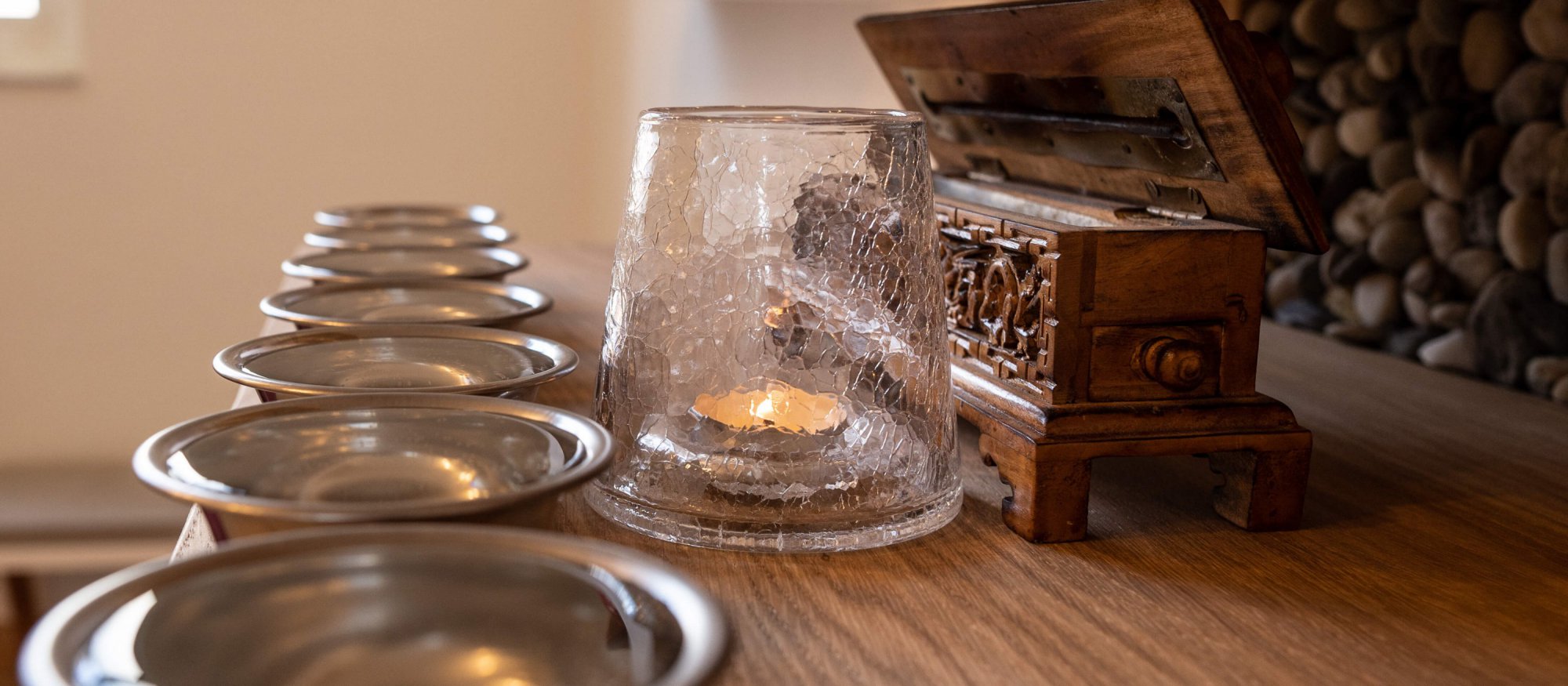
The diverse Buddhist ceremonial practices are a powerful way to clear obstacles, achieve success and harmony in our daily lives and progress in our spiritual development. Pujas, which belong to this group of practices, are a ritual incorporating meditation, visualization, and prayers to celebrate and bring good fortune. They’ve been relied on by Buddhist practitioners for centuries. There are many different types of pujas, which emphasize different aspects and bring particular benefits.
Check out our Events to see what is coming up next.
Medicine Buddha
The Eight Medicine Buddhas made special prayers to benefit beings of degenerate ages, hence in the sutric tradition this is considered one of the most powerful practices, which possesses the greatest and quickest blessings. This practice purifies and heals on all levels – physical, mental, spiritual and environmental.
At the end of our monthly Medicine Buddha Practice we will make dedications to all the beings who need help and support at the time. If you would like for us to make a special dedication to yourself, friend or family member, please fill out the Request Dedication Form.
Check out our Events for the upcoming practices.
Green Tara
Joyful and peaceful, beautiful and powerful, Tara is the embodiment of enlightened activity. She is a fully awakened Buddha, who vowed to work for all sentient beings as a female until samsara ends. She achieved liberation by following the same spiritual path many practitioners follow until this day. Known as the Liberator, she is always ready to rush to the aid of others.
Check out our Events for the upcoming practices.
Avalokiteshvara Guru Yoga
Avalokiteshvara, also known as Chenrezig, embodies the great infinite compassion aspect of all the Buddhas. The great compassion comes from not only wishing all sentient beings be free from suffering but actually put it to action to alleviate sufferings. In this group practice, we get together following the sadhana written by His Holiness Dalai Lama called “The Inseparability of the Spiritual Master and Avalokiteshvara”.
In our monthly Avalokiteshvara Guru Yoga Practice we will make dedications to all the beings who need help and support at the time. If you would like for us to make a special dedication to yourself, friend or family member, please fill out the Request Dedication Form.
Check out our Events for the upcoming practices.
Lama Tsongkhapa Guru Yoga
Lama Tsongkhapa Guru Yoga is a particularly powerful practice for receiving the blessings of one’s personal teacher and developing the realization of guru devotion. Also known as the Hundred Deities of Tushita (Ganden Lha Gyama), it is a seven-limb practice related to Lama Tsongkhapa, a great Tibetan scholar, saint, and yogi of the 14th century. This practice is much used when in LamRim retreat, to be done before the daily contemplation on the graduated path to enlightenment.
Check out our Events for the upcoming practices.
Lama Chöpa (Guru Puja)
Lama Chöpa (Guru Puja) is an offering practice, which celebrates the kindness and compassion of our teachers and lays the whole path to enlightenment onto our mindstream. The practice of guru puja with Tsog as a group is a skillful way of accumulating vast merits and purification of negative karma, which is the core practice of Mahayana Buddhism. Lama Chöpa is traditionally offered on the 10th and 25th days of Tibetan Calendar. If you wish to join us for Lama Chöpa, please bring a small symbolic offering, such as sweets, snacks or fruits. One does not need to have a personal teacher to participate and benefit from this practice.
Tsog means gathering. Gathering together with other practitioners concentrating our minds into the same space gives us great inspiration. Realizations come as if magnetically attracted.
~Lama Yeshe